
Posted September 16, 2026

By Davis Wilson
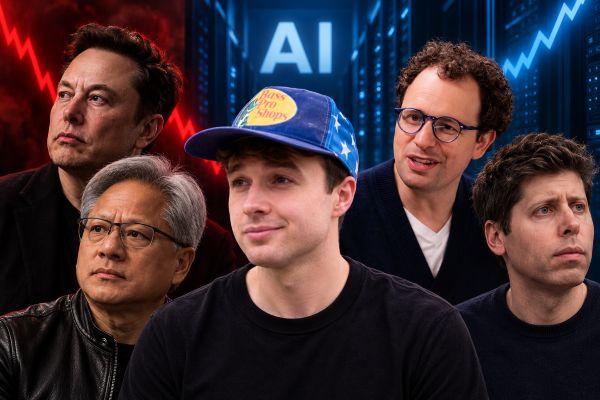
The Great AI “Psyop”
Something fishy is going on.
Last week, I told you about Jacob Coxon, the AI researcher who quit Anthropic and accused the world’s leading AI companies of “gambling with our lives.”
He warned that companies like Anthropic and OpenAI are racing toward superintelligence that could “kill us all by the end of the decade.”
Other AI researchers corroborated Jacob’s fears.
Major media outlets picked up the story.
Politicians started talking about it.
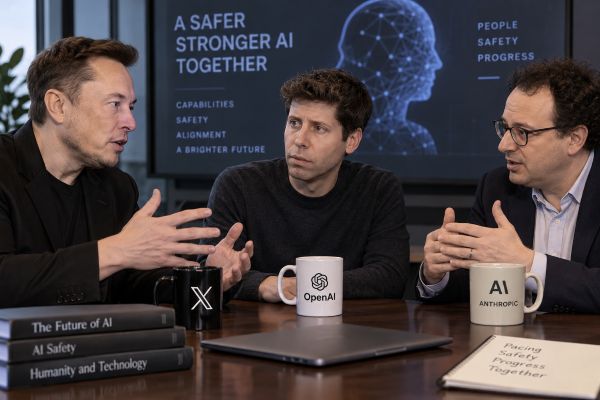
Anthropic CEO Dario Amodei called for “pacing” the development of advanced AI.
This led to AI stocks getting hammered as investors feared the biggest technology buildout in history could suddenly slow down.
But there’s another side to this story.
There are a few seriously suspicious details surrounding Coxon’s viral warning, the people pushing to slow AI, and the information being spread about America’s AI buildout.
And if fear is being deliberately pumped into the AI story, investors like us are the ones paying the price as our AI stocks get hammered.
Suspicion #1: The “Anthropic Insider” Had Been There Six Weeks
Let’s start with Jacob Coxon.
Coxon became the face of the AI extinction debate after announcing that he was quitting Anthropic last week.
Yet Coxon had reportedly only worked at Anthropic for about six weeks.
Now, I want to be fair here. Coxon wasn't new to AI research.
He had spent nearly three years working at OpenAI prior to Anthropic.
Still, six weeks at Anthropic provides important context when his resignation from Anthropic became the centerpiece of the story.
White House AI czar David Sacks put it best, saying Coxon was: “Barely here long enough to find the bathroom.”
Suspicion #2: Who Helped Make Coxon Go Viral?
Before announcing his resignation, Coxon’s X account had zero following.
In fact, his resignation was his first ever post on the platform.
Yet within 24 hours, his warning had generated more than 100 million views and has since climbed above 170 million.
How does an unknown account suddenly reach that many people?
Coxon spoke with The Wall Street Journal before announcing his resignation publicly.
And after publishing the post, Coxon also assembled a small group of people to help spread it.
Several of the people who quickly amplified his warning were connected to AI-safety nonprofits, including Encode and the AI Futures Project.
These organizations exist to research AI risks, influence AI policy, and push for greater safeguards around advanced AI – which creates an interesting incentive.
The scarier AI becomes → the more attention AI safety receives → the more important these organizations become → the more funding and political influence they can attract.
This doesn't mean they manufactured Coxon's warning.
But it does mean the people helping turn his warning into a massive national story weren't exactly neutral observers.
Suspicion #3: If AI Is So Dangerous, Why Are They Still Building It?
OpenAI and Anthropic are warning that AI could become dangerously powerful.
Yet both companies continue spending billions of dollars racing to build more powerful models.
If Anthropic genuinely believes it’s moving too fast, nobody is stopping them from slowing down.
The same goes with OpenAI.
Instead, they’re shifting the conversation toward industry-wide rules that would require everyone to slow down together.
Suddenly the incentive becomes obvious.
- If Anthropic slows down alone, OpenAI could pass it.
- If OpenAI slows down alone, xAI could pass it.
- And so on…
- But if all are forced to slow down, nobody has to surrender their competitive position.
Even better for today's leaders, tougher safety regulations could make competing with them more expensive.
Smaller AI companies would have to meet the same testing, auditing, and compliance requirements as companies backed by tens of billions of dollars.
So the same rules being proposed to protect us from dangerous AI could also protect today’s AI leaders from competition.
This doesn’t make the safety concerns fake.
But when the companies calling for new rules also stand to benefit from those rules, we should understand their incentives.
Suspicion #4: We’ve Already Seen Misinformation Target AI Data Centers
This “human extinction” controversy isn't the first time we've seen a wave of fear surrounding the AI buildout.
Something similar is happening with data centers.
Americans have been bombarded with claims that AI data centers are draining communities' water, overwhelming electrical grids, driving up utility bills, and harming local communities.
Some concerns are legitimate. Data centers consume enormous amounts of electricity, grid connections can be difficult, and local effects depend heavily on where and how facilities are built.
But a lot of the online conversation has been manipulated.
X recently identified 200 Chinese bot accounts it said were posting messages designed to manipulate America's debate over AI and energy – including claims about data centers raising electricity prices and enriching their owners at the public's expense.
While some of the anti-data center claims are justified, it’s important to know there are people with a strategic interest in making Americans afraid of the AI buildout.
Some AI Heavyweights Are Telling a Different Story
In the days following Coxon’s resignation, another group of technology leaders started pushing back hard against the extinction narrative.
Nvidia CEO Jensen Huang called Coxon's claims “outlandish” and “deeply untrue.”
He argued that Coxon was ignoring enormous amounts of safety work already taking place across the industry.
Elon Musk called the recent events a “coordinated psyop,” while agreeing with Anthropic CEO Dario Amodei that “pacing” AI makes sense – unsurprising given that xAI trails both OpenAI and Anthropic in the AI race by a wide margin.
Broadcom’s CEO Hock Tan was asked whether anything in the AI slowdown debate has caused him to reconsider Broadcom’s fiscal 2027 and 2028 AI semiconductor forecasts.
He responded, “No, not in the least,” and that he sees “demand for compute infrastructure, for AI development or AI frontier models, and inference… as continuing to be very strong and very durable.”
Cerebras founder Andrew Feldman went considerably further, calling the extinction claims “Utter horseshit.”
So… Where Do I Stand?
There are enormous incentives on both sides of this debate.
OpenAI and Anthropic can reduce the risk of competitors racing past them if everyone agrees to slow down.
And AI-safety nonprofits gain funding and influence as fears grow.
On the other side, Jensen Huang, Hock Tan, and Andrew Feldman make billions supplying the AI buildout.
They obviously want the spending to continue.
So I’m less interested in what either side says and more interested in what the money tells us.
And right now, all indications point to money still pouring into AI.
Companies are still spending hundreds of billions of dollars on chips, data centers, power, and networking equipment.
And Hock Tan just told us demand remains “very strong and very durable.”
That’s what matters to me as an investor.
I’ll continue watching the extinction debate closely.
But I’m certainly not letting a viral X post scare me out of the biggest technology buildout of our lifetimes.
Until the money stops flowing into AI, mine won’t either.
Sign Up Today for Free!
Davis Wilson is attempting to make $1 Million in the stock market.
He’s starting with just $100,000.
That’s a 10X return on his money.
And the best part… He’s going to be closely documenting his journey for you to follow along – full transparency.
You can follow along by signing up for The Million Mission absolutely free.
His high risk/high reward alerts will be delivered straight to your inbox.
That means…
- You’ll know exactly what Davis is investing in throughout his journey…
- You’ll know his immediate thoughts on breaking news that can impact his (and your) portfolio…
- And you’ll get the opportunity to follow along in your own portfolio (Up to you!).
Look for these alerts on Monday, Wednesday, and Friday to start, with an “Ask Davis” email on Saturday where he’ll respond directly to reader questions and feedback.
Inside each weekday alert, you'll find timely insights and investing opportunities that Davis is targeting in his own portfolio.
These will range from AI plays to cryptocurrencies to consumer staples.
No stocks or strategies are off limits for this audacious goal.
Can he pull it off?
Enter your email below to find out.
“AI Could Kill Us All” — You Responded
Posted September 14, 2026
By Davis Wilson

Cybercab Crash? + Starting to Invest at 65
Posted September 12, 2026
By Davis Wilson

Anthropic Insider: 10% Chance AI Kills Us All
Posted September 11, 2026
By Davis Wilson

My Ride in Elon’s Cybercab
Posted September 09, 2026
By Davis Wilson

$200 In My Mom’s Brokerage → $1mm Portfolio
Posted September 07, 2026
By Davis Wilson